
Every time I walk into a school for the first time to introduce the Digital Skills Accelerator for Women and Girls (DSA) programme, one question almost always comes up, usually from the head teacher, sometimes from a classroom teacher, asked with genuine curiosity.
“Why only the girls?”
It is a fair question. And it deserves a serious answer, not a defensive one.
Over the past three years, working at the forefront of the DSA programme at AREAi, I have sat across from school heads, community leaders, and government officials who have posed this question in different ways. Some frame it as a matter of fairness: “Our boys need digital skills too.” These are not unreasonable positions. They come from people who genuinely care about their students and communities. But they reflect a gap in understanding that every practitioner and organisation working in digital inclusion has a responsibility to address clearly, respectfully, and with evidence.
Before we talk about solutions, we need to sit honestly with the scale of the problem.
The International Telecommunication Union (ITU) estimates that globally, 259 million fewer women than men use the internet, and that gap is not closing fast enough. In sub-Saharan Africa, women are 37% less likely than men to use the internet; in some low-income countries, that figure widens to over 40%. According to the GSMA Connected Women report, women in low- and middle-income countries are 19% less likely than men to own a mobile phone, and in sub-Saharan Africa, that gap rises to 23%.
In Nigeria, the picture is stark. A 2022 report by the Alliance for Affordable Internet (A4AI) found that women are significantly less likely to be online than men, and those who are online are far less likely to use the internet for productive, income-generating, or educational purposes. The gender gap in digital access in Nigeria is not simply a technology problem. It is woven into structural inequalities around education, economic autonomy, mobility, and social norms.
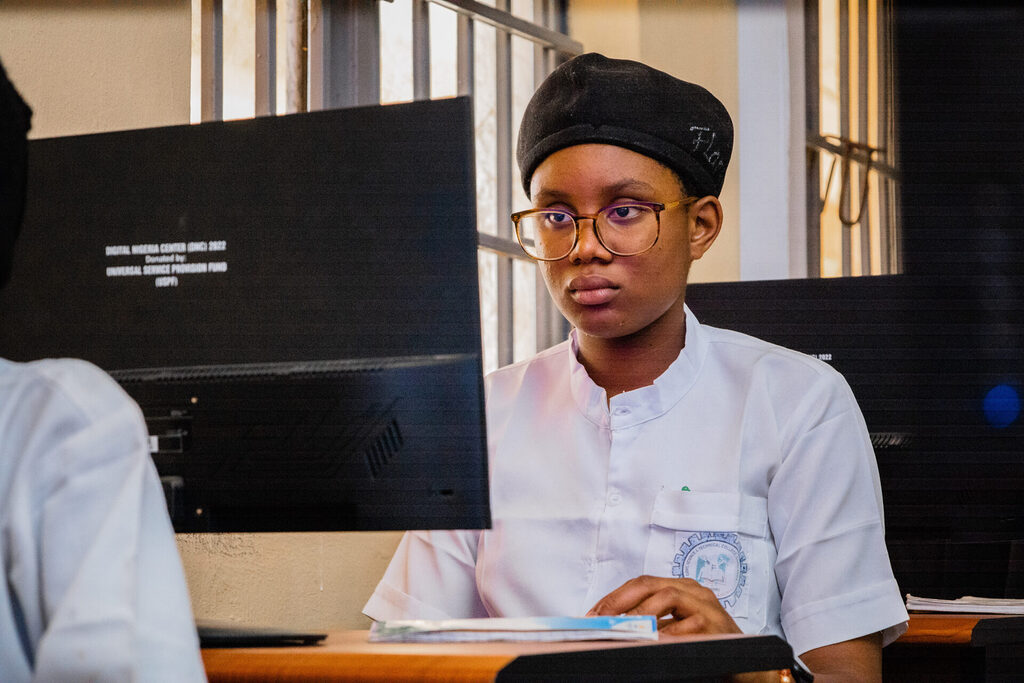
For girls aged 13-18 years, the cohort at the heart of our programme, the consequences of digital exclusion are neither abstract nor distant. They are immediate and compounding. A girl who leaves secondary school without foundational digital skills is not merely behind her peers on a technology curve. She is being systematically locked out of a digital economy, out of healthcare systems migrating online, out of learning platforms that have shifted to the cloud, and out of the civic spaces where her voice increasingly needs to be heard.
When I explain to school heads why our programme focuses on girls, I am direct: the digital divide did not happen by accident. It is the product of layered, compounding disadvantages accumulated over decades, and of deliberate choices, alongside unintentional omissions, not to invest in girls’ digital education.
Consider the structural realities that shape a Nigerian girl’s relationship with technology before she ever touches a device.
Educational inequality is persistent and significant. According to UNICEF, Nigeria has the highest number of out-of-school children in the world, with girls disproportionately represented. Girls who do remain in school are more likely to attend under-resourced institutions with fewer computers, fewer trained ICT teachers, and less time allocated to technology subjects.
Social norms and household dynamics shape who gets access to shared devices at home. Research consistently shows that in households with limited digital resources, boys are more likely to receive priority access to phones, tablets, and computers. A 2020 study by the Broadband Commission for Sustainable Development found that girls in Africa are frequently restricted from using family devices over concerns about “wasting time” on screens, concerns applied far less consistently to boys.
Safety concerns constrain girls’ digital participation. Cyberbullying, online sexual harassment, and exposure to harmful content are experienced at higher rates by women and girls. Without digital literacy education that includes online safety, girls who do access the internet face heightened vulnerability, a reality that often reinforces the very cycle of restriction it should disrupt.
Economic barriers intersect with gender. Girls in low-income households are less likely to own personal devices, less likely to have consistent access to data or airtime, and less likely to have caregivers who frame digital skills as a worthwhile investment in a girl’s future.
These are not individual failures. They are systemic patterns. And they demand a targeted, intentional response, not a universal one.
This is where I find it most useful to pause with the conversation of why just girls and draw a distinction that changes the conversation.
Equality means giving everyone the same thing. Equity means giving people what they need to reach the same starting line.
If we distributed digital skills training equally, offering the same access to boys and girls in the same proportion, we would be ignoring the fact that boys and girls do not arrive at the starting line with the same preparation, the same safety, or the same social permission to participate. Equal treatment of unequal conditions does not produce equal outcomes. It reproduces inequality with a more comfortable narrative.
The Digital Skills Accelerator Programme is not premised on the idea that boys do not need digital skills. They do. But boys, on average, have more pathways to those skills through school ICT clubs, household device access, and social norms that actively encourage their digital participation. Our programme exists to create a pathway for girls who do not have those same routes. It is not exclusion. It is a targeted investment in those who have been systemically left behind.
To put it plainly: we are not taking anything away from boys. We are giving girls what the world has consistently withheld from them.
Theory matters. But so does evidence from practice.
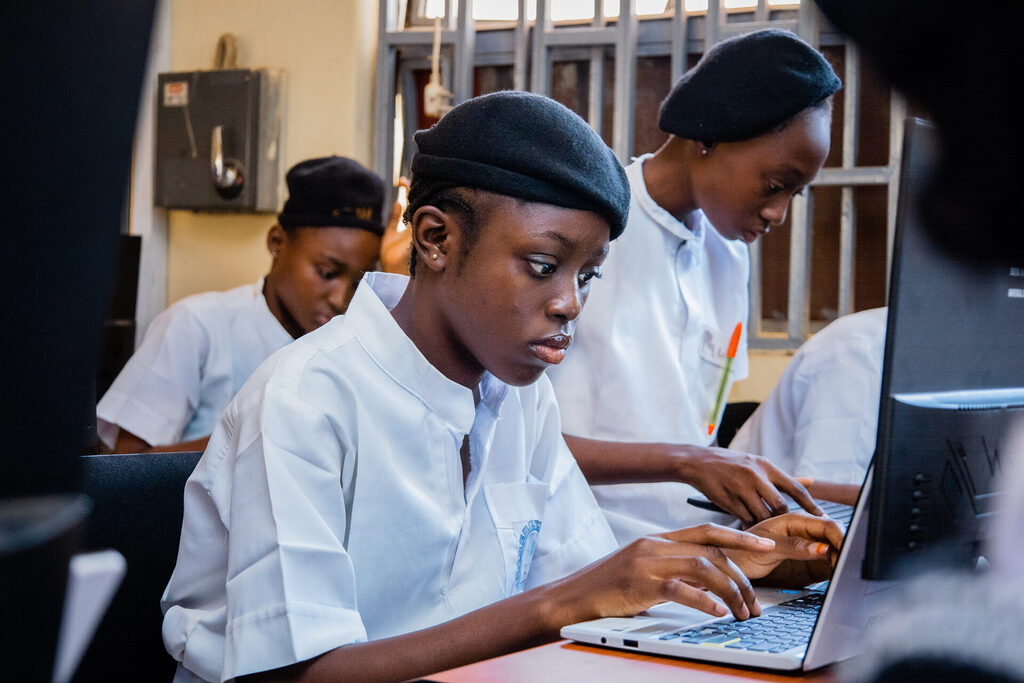
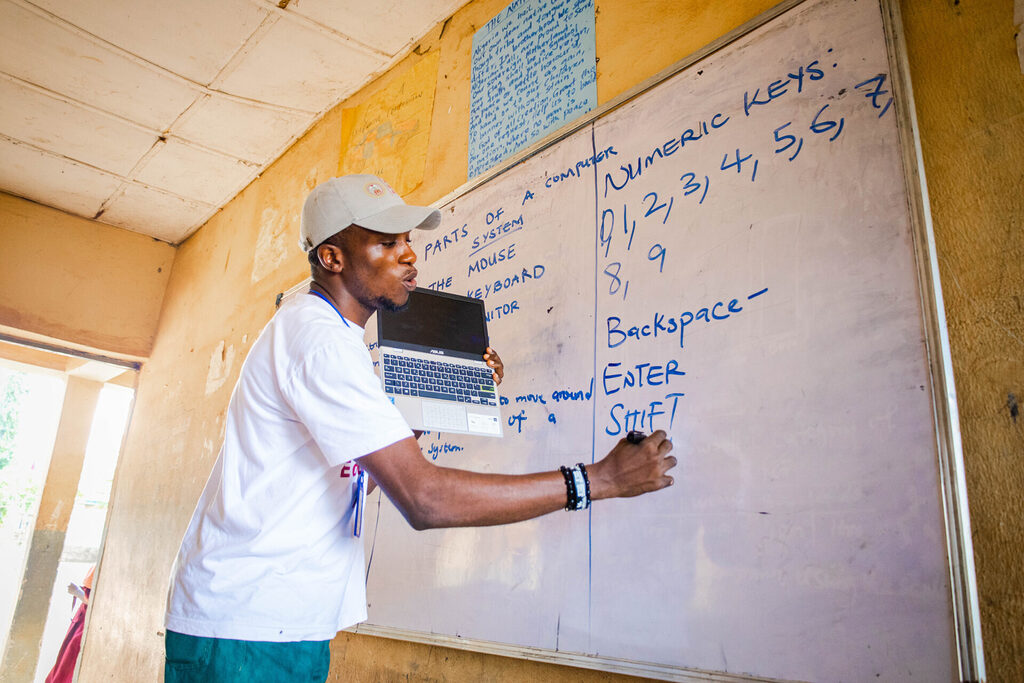
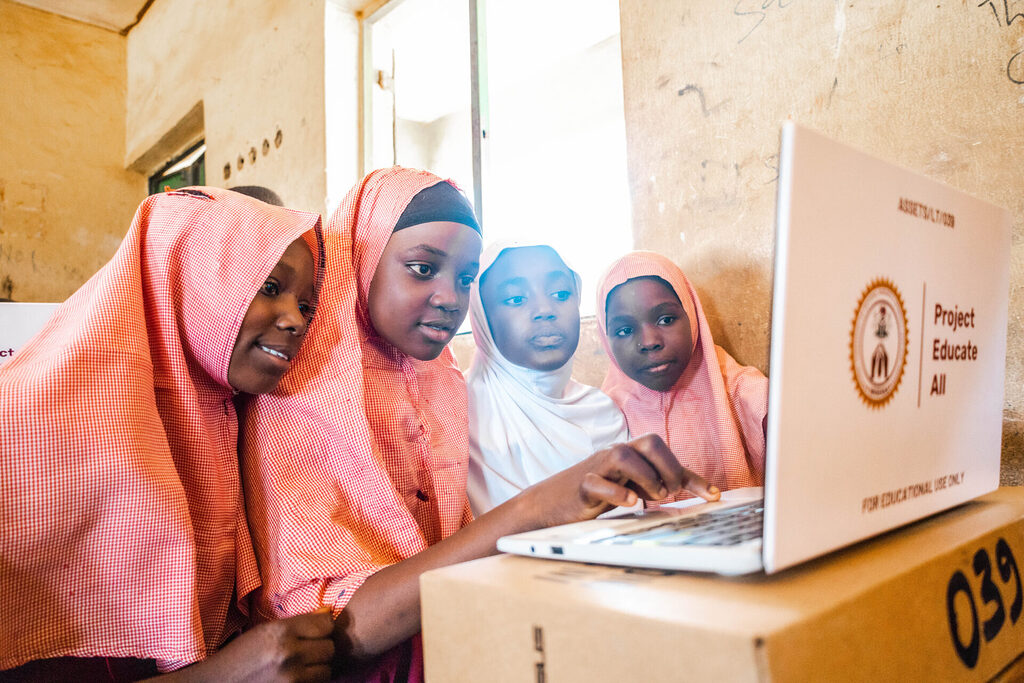
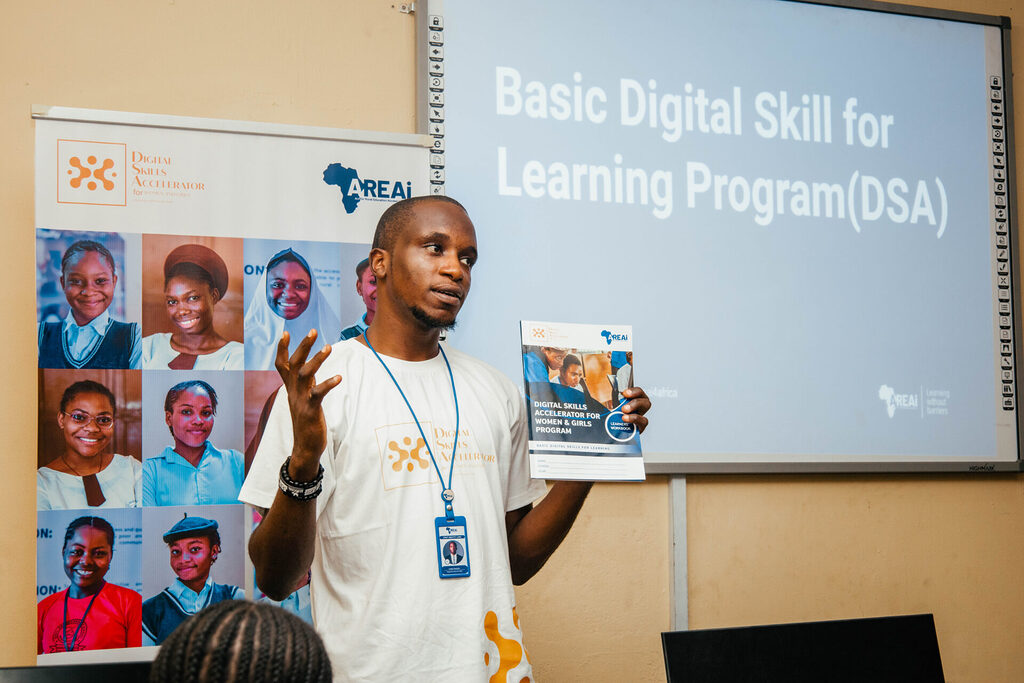
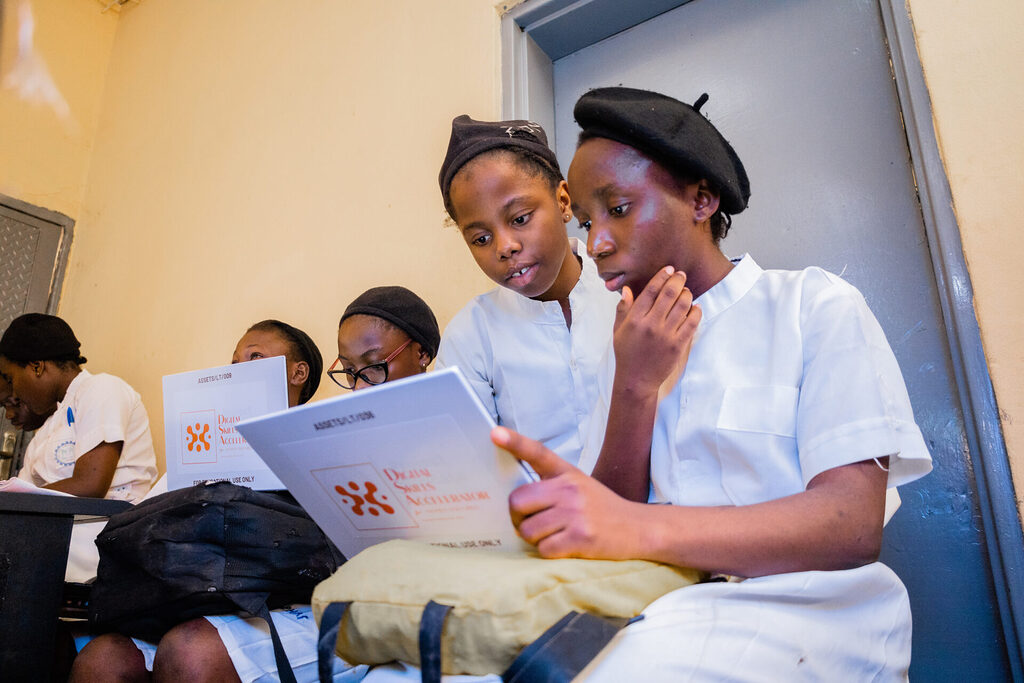
Since the Digital Skills Accelerator Programme began, I have watched girls who had never independently operated a laptop learn to navigate browsers, manage basic software, and build the foundational competencies needed to participate in a digital economy. The progress has been measurable, and it has been meaningful.
Our Mobile Technical Literacy project, which has reached over 2,000 adolescent and married girls in Nigeria’s North-West, has produced documented improvements in foundational digital competency and increased confidence in technology use. Critically, it has produced something harder to quantify but equally important: a shift in how participating girls see themselves in relation to technology. They no longer see it as something that belongs to other people. They see it as a tool that is theirs to use, and one that can be genuinely transformative, including as a pathway to economic empowerment. These are not small changes. In contexts where a girl’s access to information, healthcare, education, and economic opportunity increasingly flows through a screen, the ability to confidently and safely navigate digital spaces is not a luxury skill. It is a survival skill.
For school heads who are thinking beyond their institution, and many of the best ones, the argument for digital equity for girls must also be made at the macro level.
The African Union’s Agenda 2063 and Nigeria’s own National Digital Economy Policy and Strategy both identify digital inclusion as central to sustainable development. But policies are only as powerful as the populations they reach. An Africa that digitises its economy while leaving half its population, its women and girls, without the skills to participate, is not building a digital future. It is building a digital apartheid.
McKinsey Global Institute estimates that advancing women’s equality in Africa could add $316 billion to the continent’s GDP by 2025. A significant share of that potential is locked behind the digital gender gap. When girls cannot access digital skills, they cannot access digital jobs, digital financial services, digital health information, or digital civic participation. The economic and social cost of that exclusion is not borne only by the girls themselves. It is borne by their families, their communities, and their nations.
Furthermore, as artificial intelligence and automation continue to reshape labour markets globally, the jobs of the future will disproportionately require digital fluency. Girls who are not building those skills today are being quietly priced out of tomorrow’s economy, not because they are less capable, but because they have been less invested in.
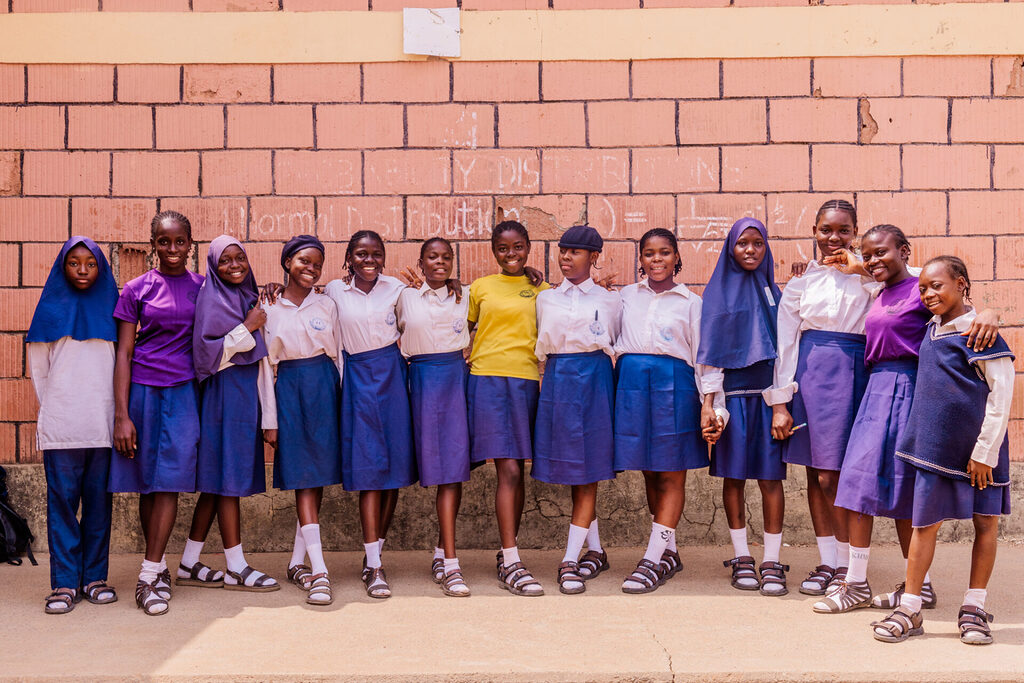
I want to speak directly now, not only as someone who leads this programme, but as an advocate for the millions of girls it has not yet reached.
What we are doing with the Digital Skills Accelerator Programme is working. The evidence from our implementation across several implementation schools is clear, the methodology is proven, and the demand from communities is real and growing. But our current reach, as meaningful as it is, is a fraction of what is needed.
There are millions of girls across Nigeria, across West Africa, and across the continent who are growing up in the same digital silence that our current learners are breaking through. They are in schools without ICT labs. They are in communities without facilitators who look like them. They are in households where no one has told them that the internet is for them, too.
Scaling this work is not simply a programmatic ambition. It is a moral imperative.
I want to make three specific recommendations to school heads, education leaders, and development partners reading this:
When a school head asks me, “Why only the girls?”, I have learned that the real question underneath it is often: “Do you see my boys? Do they matter too?”
The answer is yes. Every child matters. Every learner deserves access to the skills that will shape their future.
But equity requires us to look clearly at who has been left furthest behind and to move toward them with intention, with resources, and with the conviction that closing the gap is not a zero-sum game. When girls thrive digitally, families benefit. Communities benefit. Schools benefit. Nations benefit.
The Digital Skills Accelerator Programme exists because we believe that every girl deserves to navigate the internet with confidence and safety, and to know that the digital world was built for her, too.
We are not done. We are just getting started.
International Telecommunication Union (ITU). (2023). Measuring digital development: Facts and figures 2023. Geneva: ITU. https://www.itu.int/en/ITU-D/Statistics/Pages/facts/default.aspx
GSMA. (2023). Connected Women: The mobile gender gap report 2023. London: GSMA. https://www.gsma.com/connected-women/
Alliance for Affordable Internet (A4AI). (2022). Meaningful connectivity: A new standard for connecting the world. Washington, D.C.: Web Foundation. https://a4ai.org/meaningful-connectivity/
UNICEF. (2022). Education: Out-of-school children in Nigeria. Abuja: UNICEF Nigeria. https://www.unicef.org/nigeria/education
Broadband Commission for Sustainable Development. (2020). Bridging the gender divide: Broadband access for women. Geneva: ITU/UNESCO. broadbandcommission.org/publication/bridging-the-gender-divide/
African Union. (2015). Agenda 2063: The Africa we want. Addis Ababa: African Union Commission. https://au.int/en/agenda2063/overview
McKinsey Global Institute. (2019). The power of parity: Advancing women’s equality in Africa. McKinsey & Company. https://www.mckinsey.com/featured-insights/gender-equality/the-power-of-parity-advancing-womens-equality-in-africa.
Written by: Lucky Owoicho
Programme & Innovation Manager (DSA), AREAi