
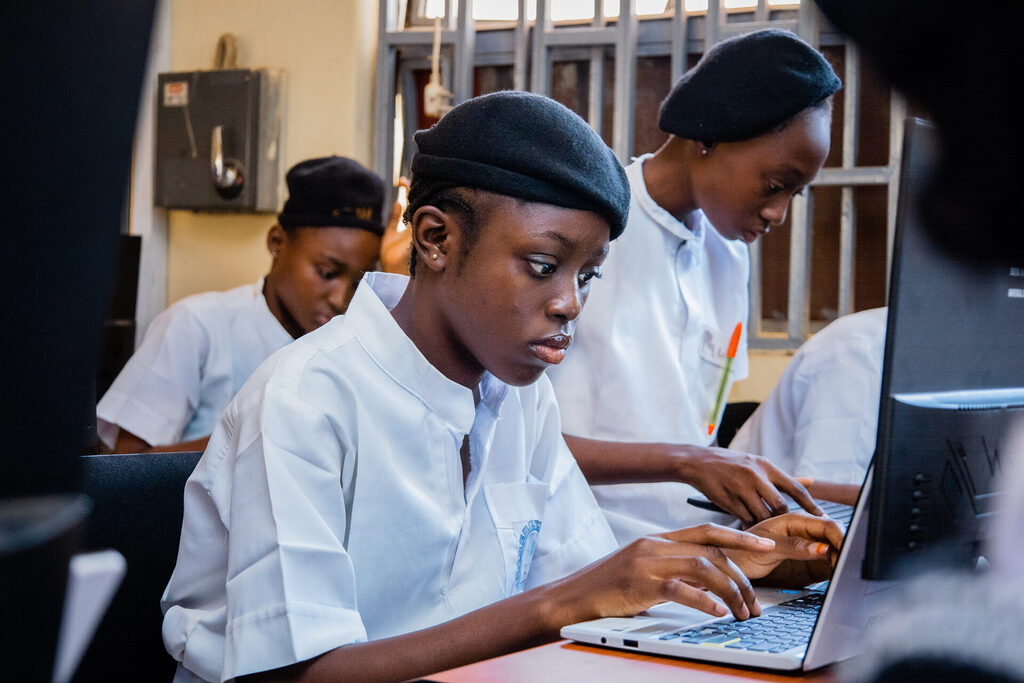
More frequently, the conversations around women and girls in science tend to revolve around enrolment into laboratories, the workplace, innovation ecosystems, tertiary and research institutions. Every year, the International Day of Women and Girls in Science invites renewed conversations about representation, participation, and leadership in science and technology. However, the timing for these relevant conversations is mostly already too late because the process of exclusions has already been completed. By the time girls are choosing careers in science or technology, many have already been excluded because science pathways for women and girls are mostly never initiated in tertiary education, but rather by exposure to learning systems that develop the foundational skills, confidence, and digital competence needed to thrive in STEM careers. Among underserved communities, digital exclusion is the silent dead end of the road to science, and it is the fate of millions of girls.
According to UNESCO, only about 28% of engineering graduates and 40% of computer science graduates are women, with only 22% of AI professionals being female globally. Women and girls remain underrepresented in science and technology fields, particularly in low-resource contexts. This gap is compounded by early exclusion from digital learning opportunities, long before career pathways are formed. These gaps are not an indication of a lack of talents but they are indicators of systemic barriers women and girls face,e such as gendered expectations, lack of role models, unsupportive learning environments, and inequitable access to resources.
Digital inequity compounds these challenges. As education, science, and innovation become more digitised, exclusion from digital learning spaces effectively becomes exclusion from future participation in science. Digital equity, therefore, must be understood not as a downstream outcome of development, but as an upstream condition for inclusion. Before girls can aspire to careers in science, technology, or innovation, they must first have equitable access to education, digital tools, and the foundational skills that enable participation in a rapidly digitising world. Without this access, science remains out of reach by design.
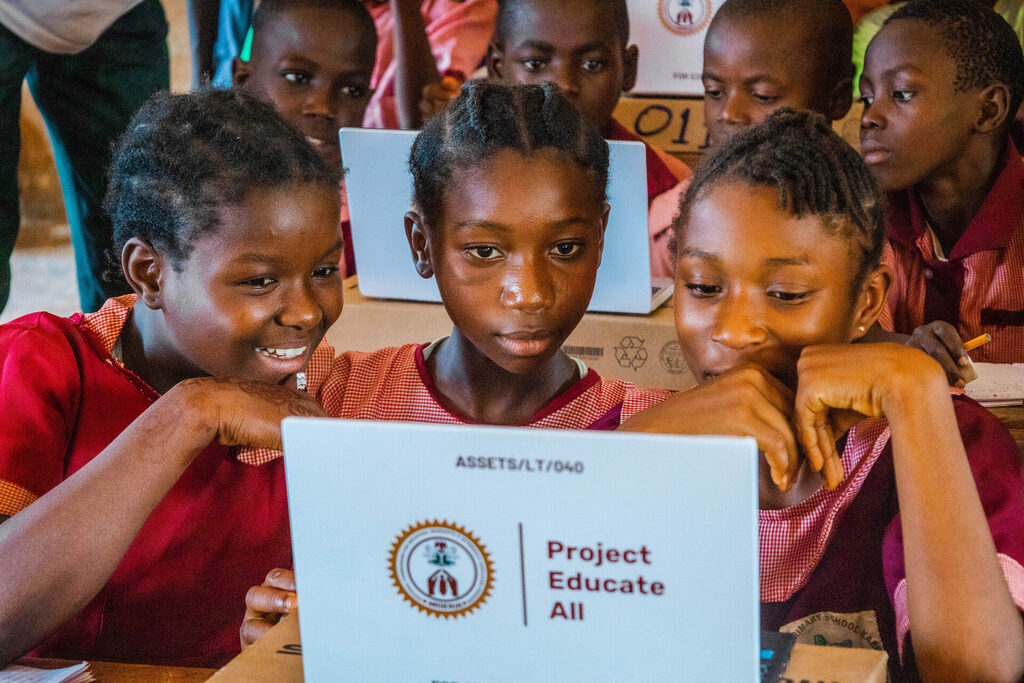
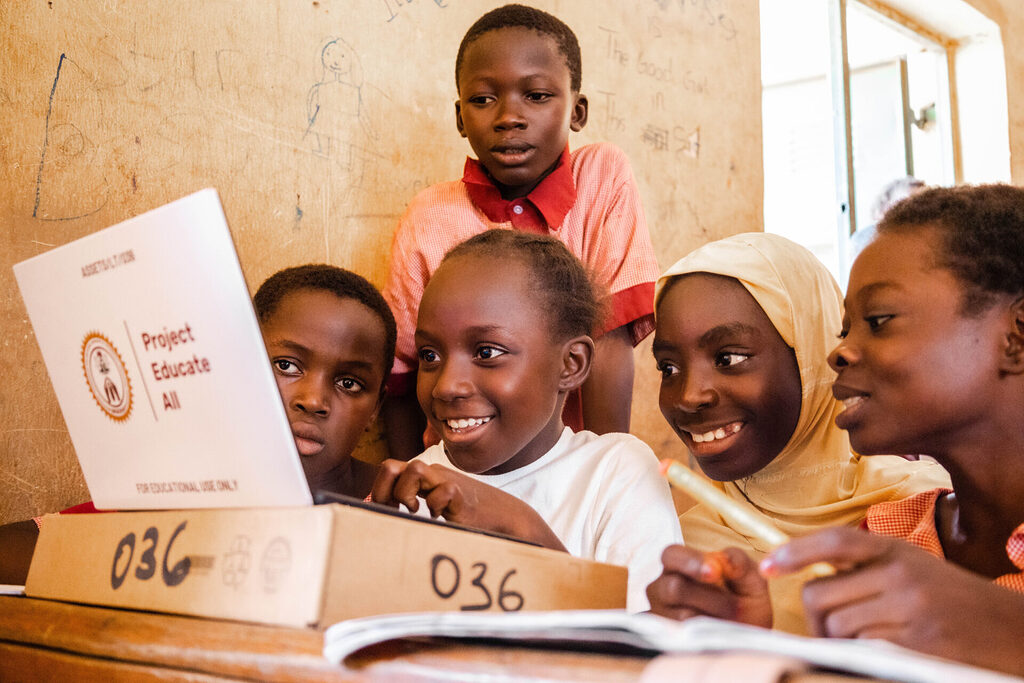
Digital equity requires more than connectivity or devices; it is about access to relevant digital skills, inclusive learning environments, and systems that allow women and girls to meaningfully participate in the digital economy. Digital transformation risks widening existing inequalities rather than closing them in the absence of intentional and targeted interventions.
Early digital competence for girls supports problem-solving and analytical thinking, access to information and learning resources, and confidence in engaging with technology-enabled spaces. These competencies are increasingly inseparable from science learning and participation. When girls are excluded from digital skills development early on, the consequences ripple forward, narrowing education pathways, limiting opportunities, and expanding gender gaps in science and innovation.
This challenge, however, is not insurmountable, but the strategy would require a shift in focus from late-stage interventions aimed at workforce or laboratory participation to early, systems-level investments that build skills, confidence, and access from the ground up.
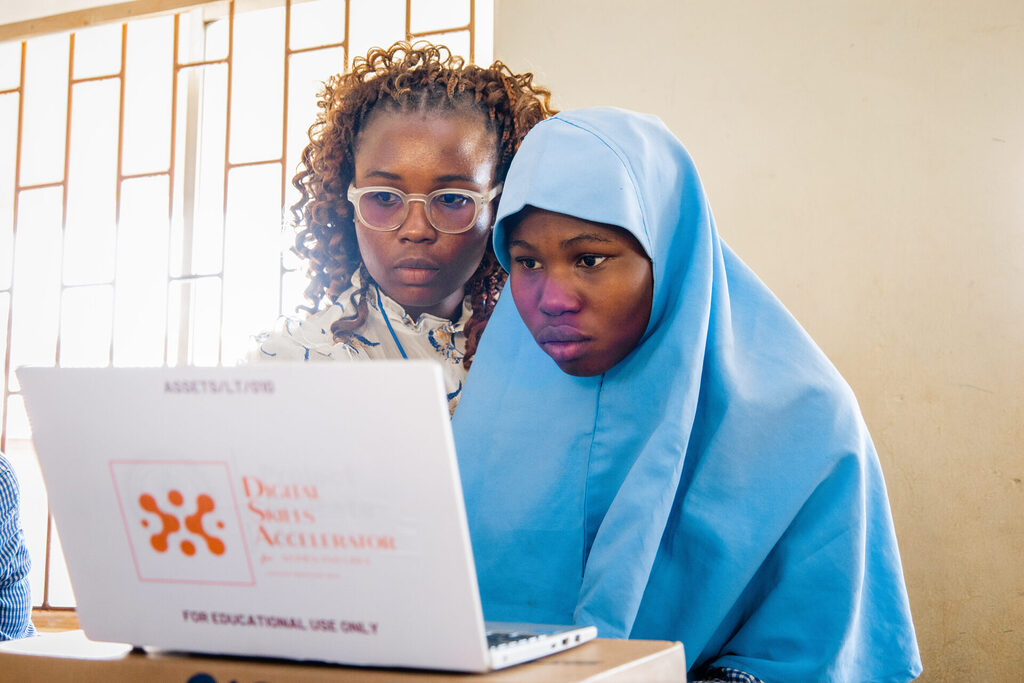
At AREAi, this understanding informs the design of the Digital Skills Accelerator (DSA) for Women and Girls Program. We see digital equity as a systems‑level enabler, not an add‑on. This is why we developed the Digital Skills Accelerator (DSA): to expand access to foundational digital skills for women and girls in underserved and crisis‑affected communities. This program was developed in response to the recognition that digital inequity is one of the earliest and most persistent barriers shaping outcomes for women and girls. The DSA program prioritises digital skills as a bridge that connects foundational learning to broader educational, economic, and scientific opportunities, with a solid focus on practical, context-relevant digital competencies while remaining responsive to the realities of underserved communities.
The program is strategically designed to be implemented within existing learning ecosystems, which further addresses barriers related to access, participation, and retention, ensuring that women and girls are not only present in digital learning spaces but supported to engage meaningfully, build confidence, and apply skills in ways that expand their choices.
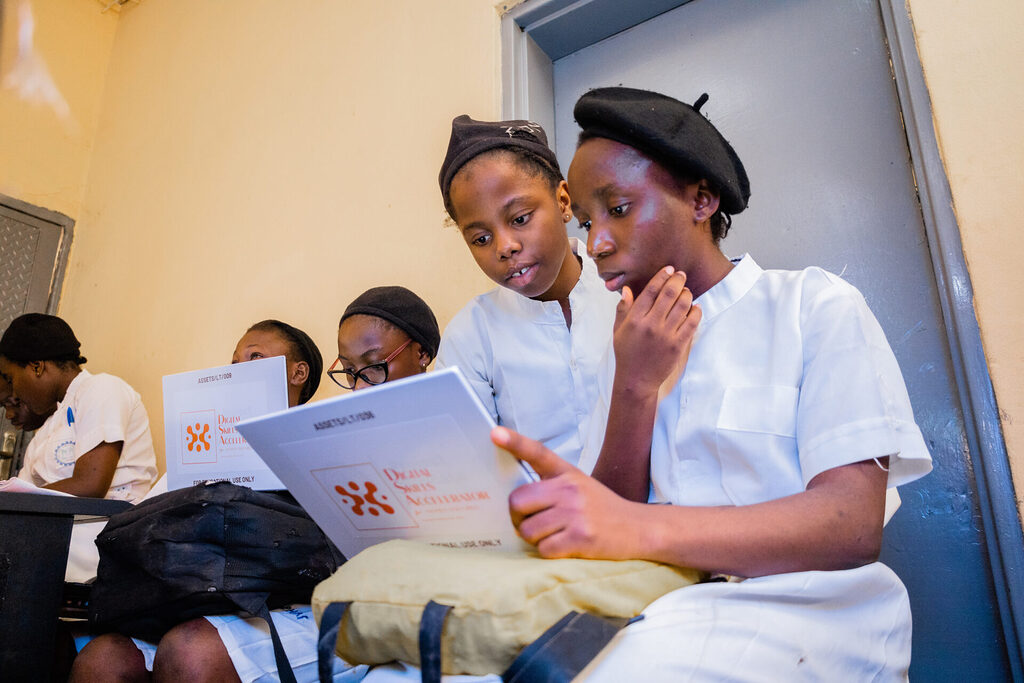
Participation in science increasingly requires exposure and competence in digital tools and ways of thinking. From data literacy to problem-solving, digital skills shape how women and girls interact with scientific content and opportunities. When girls are exposed to digital learning opportunities, they are strengthened with foundational digital competencies that underpin science education. It also expand their sense of what is possible and encourages them to pursue careers in STEM as the initial exposure to the digital world reduces the confidence gap that often emerges later in STEM pathways. By embedding digital skills early, programmes like DSA help ensure that girls are not filtered out of science pathways before they even become visible.
An equally important aspect of advancing digital equity for women and girls is that it is directly aligned with global commitments, including:
When we approach digital equity as a foundational systems issue, progress across these goals is strengthened. It shifts the focus from isolated interventions to intentional design of learning systems that work for those most often excluded.
Conclusively, to encourage the advancement of women and girls in science, we must move beyond celebrating individual success stories and address the systems that shape opportunity. Inspiration matters, but it cannot substitute for access. Representation matters, but it cannot compensate for exclusion built into learning systems.
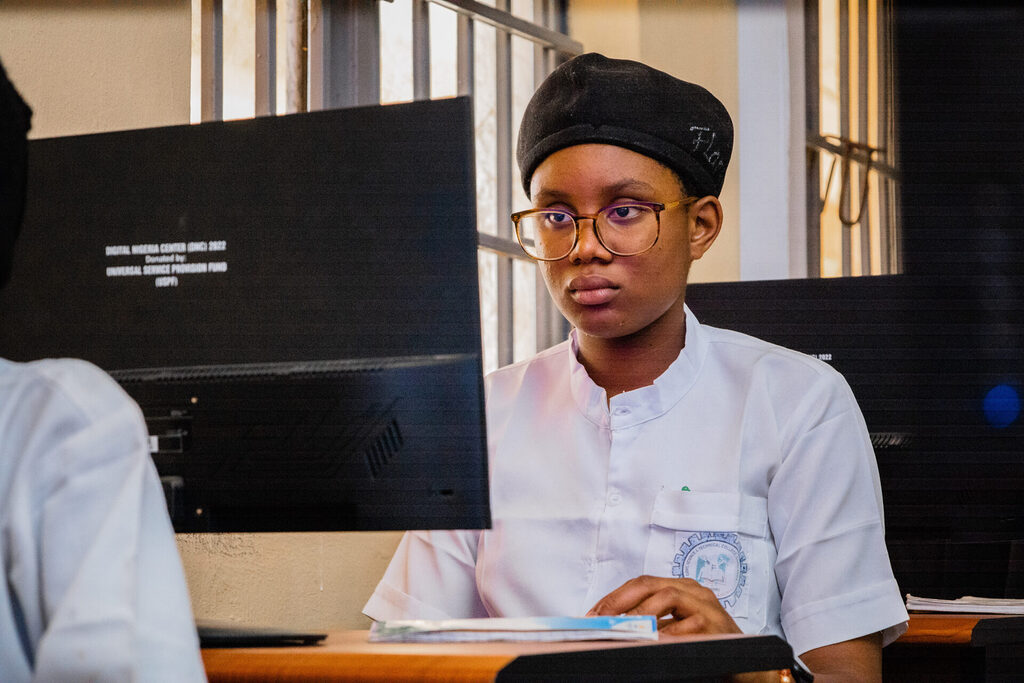
The question is not whether women and girls belong in science. The question is whether we are willing to design education and digital systems that make participation possible from the start.
Science pipelines begin earlier than we think. Digital equity is where inclusion must begin.
Written by: Elizabeth Abikoye
Director of Communications, Digital Media and Advocacy, AREAi